

The Savvy Gamer’s Guide to Casino Spending Limits

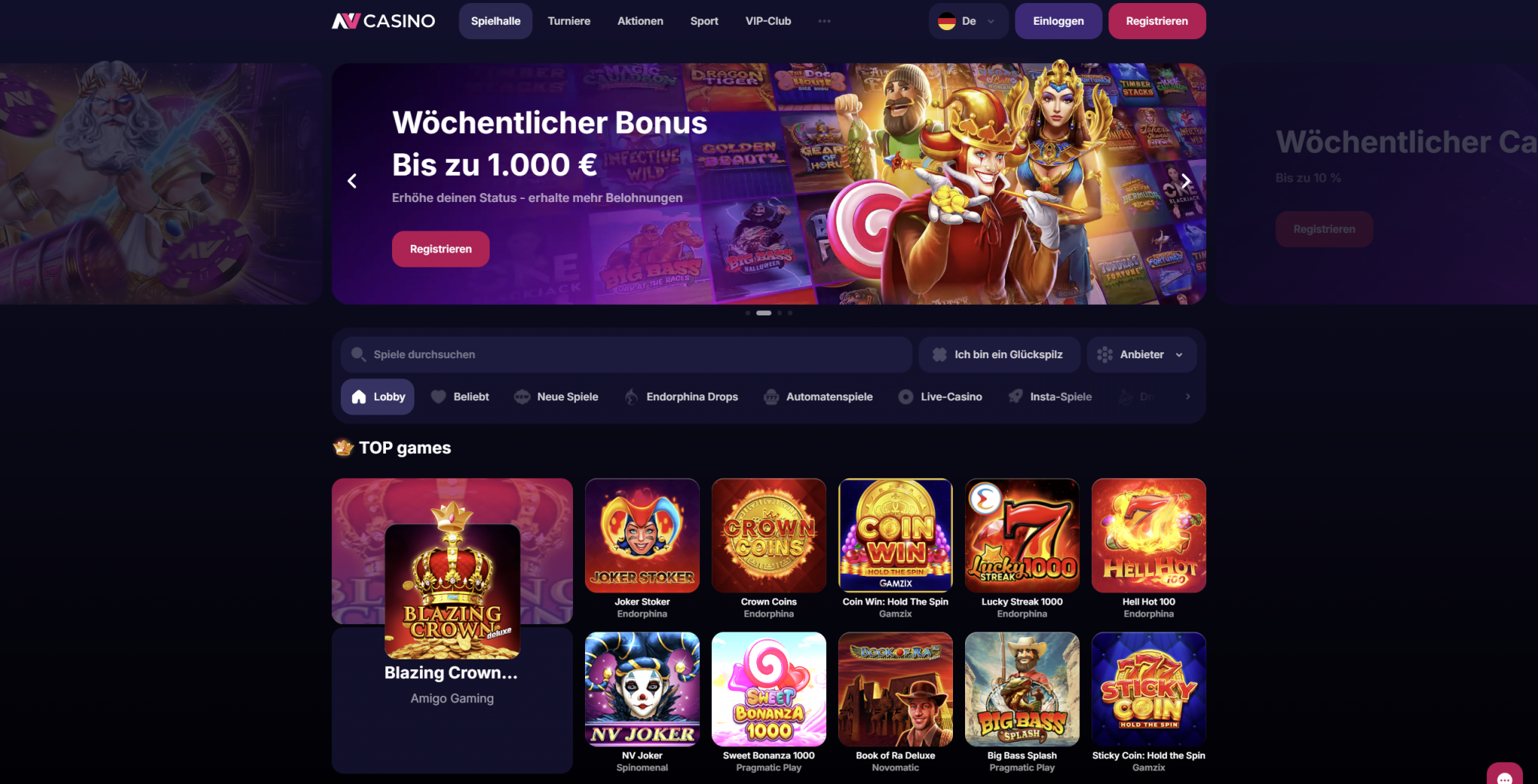
I have a single rule for anyone who inquires how to wager without risk: decide what you can afford to lose before you launch an app or walk onto a casino floor. That amount has to be exact, not a general sense. Note it in your banking app, notes or account settings. At NV Casino, the responsible gambling tools are based on that idea. Pre-commitment changes spending from an impulse into a structured budget. When the number is set, the resolve to stop becomes effortless. This overview explains how to set boundaries, utilize self-ban and locate professional support in Germany if gambling stops feeling like entertainment.
Deposit Limits: A Primary Layer of Protection
Daily, Weekly & Monthly Deposit Caps
A deposit cap controls how much money can be transferred from your bank account or e-wallet into your player account over a defined timeframe. I often suggest setting all three: daily, weekly and monthly. The daily cap prevents a single evening from becoming a financial problem. The weekly cap balances behaviour across several days. The monthly cap requires you to balance gambling with rent, groceries and savings. At NV Casino, these limits can be modified in account settings, but before you reduce or increase them, ask yourself what has changed. If the answer is just that you want to recoup a loss, maintain the lower limit in place.
Selecting a Practical Deposit Limit
The right deposit limit is not the highest amount you could afford to lose. It is the amount that makes you feel entirely at peace afterwards. I follow a simple check. Calculate three things: what you spend on other entertainment in a month, what you would spend on a short getaway, and what you can lose without changing any spending habits in the next 90 days. For some German players, a reasonable monthly deposit cap is €50. For others it is €200. The exact number is less important than whether meeting it causes stress. If losing that sum would make you uneasy or drive you to deposit again, the limit is too much.
Where to Find Professional Support in Germany
If restrictions, cool-offs or self-exclusion are not enough, professional support exists. The Bundeszentrale für gesundheitliche Aufklärung (BZgA) provides free, anonymous information and counselling. You may also contact local addiction counselling centres through the nationwide telephone directory. Many services are operated by Caritas, Diakonie or local health authorities and are financed through the German addiction support system. I always tell players that seeking help is not a sign you have failed. It means you are taking control of a problem that is structured to feel isolating. The earlier you call, the more options remain open.
In a first session, a counsellor often inquires about your gambling patterns, sleep, mood, financial pressure and any drugs or alcohol use. They will not preach to you. The goal is to grasp how gambling integrates into your life and what practical steps can be useful. You could be given individual counselling, group sessions or debt help. In Germany, the OASIS self-exclusion register can be part of that plan. At NV Casino, we back self-exclusion requests and encourage players to use external professional help alongside the platform tools. No account feature takes the place of an honest conversation with someone trained in gambling addiction.
Loss caps stop recovery betting
Deposit caps alone present one gap: you can still chase losses within the money you already deposited. A stop-loss closes that gap. It records your net losses over a period and stops further wagering once you trigger the cap. I consider this as one of the most underused tools in online gambling. A player may deposit €100, lose €60 and still have €40 in the account. Without a loss limit, that €40 becomes a tool for recovery betting. With a loss limit set at €50, the platform prevents additional wagers. The remaining balance is not a lure anymore; it is simply money you can withdraw.
When I bild.de help players determine loss limits, I often use these reference points: https://nvspielen.de/responsible-gambling/
- Conservative: loss limit equal to the cost of a normal dinner for two, around €40–60. Once it is gone, the session ends.
- Moderate: loss cap equal to a concert ticket or a day trip, around €80–150. This is a real entertainment budget, not a financial plan.
- Upper bound: loss cap capped at what you would spend on a full weekend away. This should never threaten fixed expenses or savings.
If you experience the need to exceed the upper bound, consider that as a warning signal rather than a budgeting question. Loss limits function optimally when they are based on your life costs, not on how much you want to win back. The moment you set a loss limit after losing is the moment it becomes most valuable, because you are no longer deciding in a neutral state. I recommend writing down your loss limit before a session and checking actual losses once per hour. If you cannot stick to a limit you chose calmly, use that information for a cool-off or support call.
Voluntary Ban : A Hard Break That Succeeds
Quick Break Intervals
A cool-off is a short-term block, usually from 24 hours to several weeks. I think of it as an safety stop, not a grand declaration. If you forfeit more than expected, become upset after a session, or realize you are adding funds on successive days, a cooldown offers your thinking time to recover. During that interval, you may not log in or add funds. The clock takes over. I often recommend a 72-hour break for players who notice early indicators, because three days is typically adequate to get beyond the instant desire to pursue. If the desire continues after 72 hours, extend to a week or more.
Prolonged Self-Exclusion and OASIS in Germany
In Germany, the OASIS system offers a countrywide self-exclusion choice that can restrict you from regulated gambling sites and locations for a defined time or indefinitely. NV Casino backs this framework and can assist you through the necessary steps. I advise long-term block when gambling has stopped being a financial question and has transformed into a source of constant anguish, privacy or debt pressure. Many players feel afraid to use it because they fret about giving up a hobby. In my view, the relief is typically stronger than the loss. A long pause provides opportunity for adequate help and monetary repair. You can eventually reassess later.
Why Pre-Committing to Limits Changes the Game
Most people do not overspend because they are greedy. They overspend because they are trapped in a moment. A small loss triggers the urge to win it back, a win makes the next bet feel free, and a long session blurs the value of a euro. A pre-set limit cuts through that cloud. When I ask a player to set a deposit cap before depositing, I am not asking them to depend on willpower during the session. I am asking them to arrive at the decision while their reason is composed. That distinction counts. The limit works like a safety rail, not a sanction. It keeps a bad hour from becoming a bad week.
German regulators and operators such as NV Casino offer these safeguards for a reason. The German State Treaty on Gambling introduced mandatory limits and the OASIS self-exclusion system to make high-risk play harder to maintain. But regulation only sets minimum requirements, and the smart use of limits is subjective. I recommend treating a casino budget exactly like a restaurant or ticket budget. You would not hand a restaurant your monthly salary because you loved the starter. The same logic applies to betting. Pre-commitment protects the version of you that can reason clearly, not the version chasing one more round.
Staking Limits Are Typically Forgotten
A betting limit restricts the total amount you wager, not just what you deposit or drop. This is important because a player can add €50, collect some hands, reinvest the winnings and stake €2,000 in one night. Many players would never classify themselves as high rollers, but their total betting volume tells a different story. I advise players to look at turnover because it gauges how much of their time and attention is converted into gambling volume. A wagering limit, where offered, maintains that number in line with your intended level of play. At NV Casino, I suggest checking whether your account provides turnover or wager caps alongside deposit and stern.de loss limits.
To find a sensible wagering limit, commence with your deposit cap and multiply it by a small factor suited to your preferred games. Low-volatility table games may produce more turnover without automatically meaning more cash spent. High-volatility slots can eat through deposits quickly. I prefer setting the wagering limit low at first. You can review it after a week of recorded play. The goal is not to attain the cap. The goal is to spot when actual conduct no longer fits your plan. Tracking turnover also gives you a helpful number to address with a therapist if gambling starts getting difficult.
Session and Period Limits Shield Beyond Your Wallet
Reality Checks and Forced Breaks
Funds is not the only cost of gambling. Attention, sleep and concentration are also being spent. I suggest setting a session time limit even if your bankroll is small, as the longer you play, the harder it becomes to evaluate risk. Reality checks, which are integrated into the NV Casino platform, break play at set intervals and display you how long you have been active. That pause sounds boring, but it works. It interrupts autopilot. When a player notices “You have been playing for 60 minutes,” they can match that with how the session felt. Many players are taken aback. That realization makes time spent apparent.
Building a Basic Time Budget
I apply a basic weekly time budget with German players. Treat gambling as one entertainment block, not an open-ended background activity. A practical starting point is 60 to 90 minutes per session and no more than two or three sessions per week. That is about the same time you might spend on a film or a long dinner. If a game is designed to keep you in a loop, set your phone alarm as a safeguard. The platform’s session reminder is helpful, but your own alarm is harder to ignore. If you regularly break your own time budget, activate a cool-off period instead of negotiating with yourself.